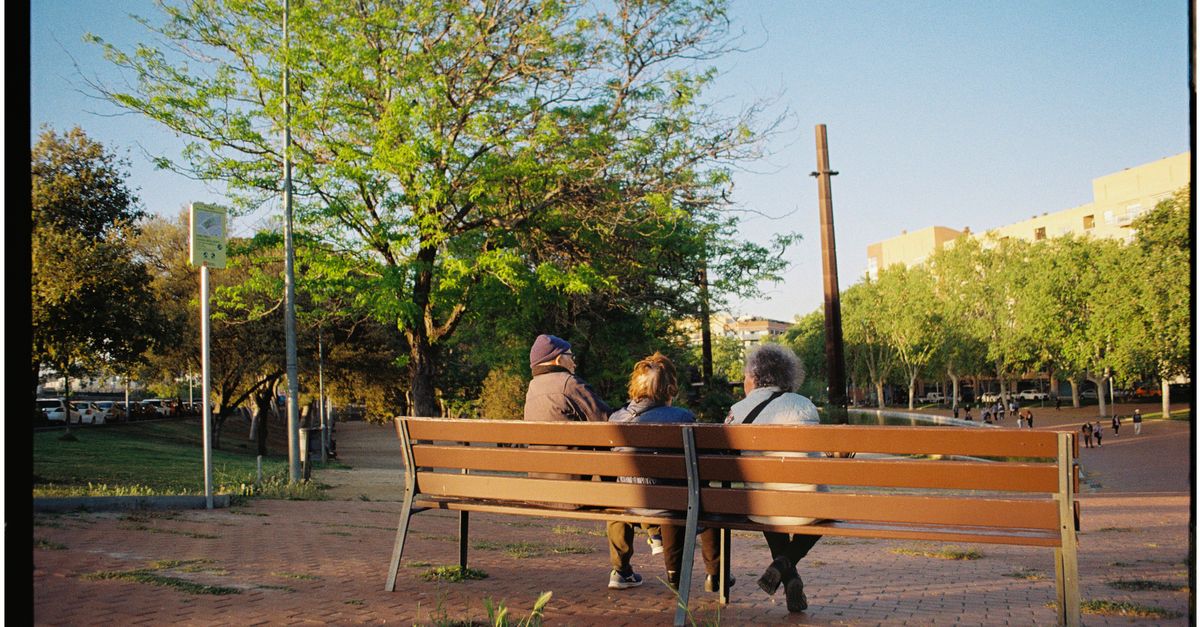
A bench looks like the simplest thing on a street. Four legs, a slat or two, a bit of shade if you are lucky. Then you sit on it for an hour and watch what happens, and it stops being simple. In dense neighbourhoods, a bench, a low wall or a strip of shade is not furniture. It is territory, and it changes hands several times before the day is done.
The first claim usually goes to whoever arrives earliest and needs the spot most. A man with a folded jacket under his arm takes the end nearest the road, because that is where he can see the taxis coming. A woman with two shopping bags settles in the middle, where the slats are flattest. Nobody says anything. The arrangement just happens, and everyone who arrives later reads it in a second and picks a place that does not disturb it.
By mid-morning the bench has a second life. Schoolchildren stop for a few minutes on their way past, then move on. A delivery rider leans his bike against the armrest and eats standing up. When the sun shifts, the whole group drifts two metres to the left, following the shade, and the bench is briefly empty before it fills again. The rules are never written down. They are understood, and they are enforced mostly by small movements rather than words.
Rain changes everything. A sudden downpour turns the bench into a shelter, and the easy distance people kept from each other collapses. Strangers end up shoulder to shoulder, apologising with their posture. When the rain stops, the space opens up again, and the earlier order slowly returns. The same thing happens when a van parks badly and blocks the kerb, or when a trader sets out crates on the pavement and the bench becomes the only place left to wait.
What stays with you is how little of this is spoken. People give up a seat without being asked. Someone shifts a bag to make room. A regular nods at a newcomer and that nod is enough to say the spot is fine for now. It is a small, unglamorous form of negotiation, and it happens on benches, low walls and patches of shade all over the city, every single day.